

Sports lighting
Football pitch lighting
A football pitch changes with what happens on it. A midweek training session does not ask for the same as an official match, and the project starts by telling them apart.
The starting point
Use decides the light.
Before choosing a floodlight, the project looks at how many days the pitch is used for training, how many for matches and who uses it for the rest of the week.
- Training
- Competition
- Renovation
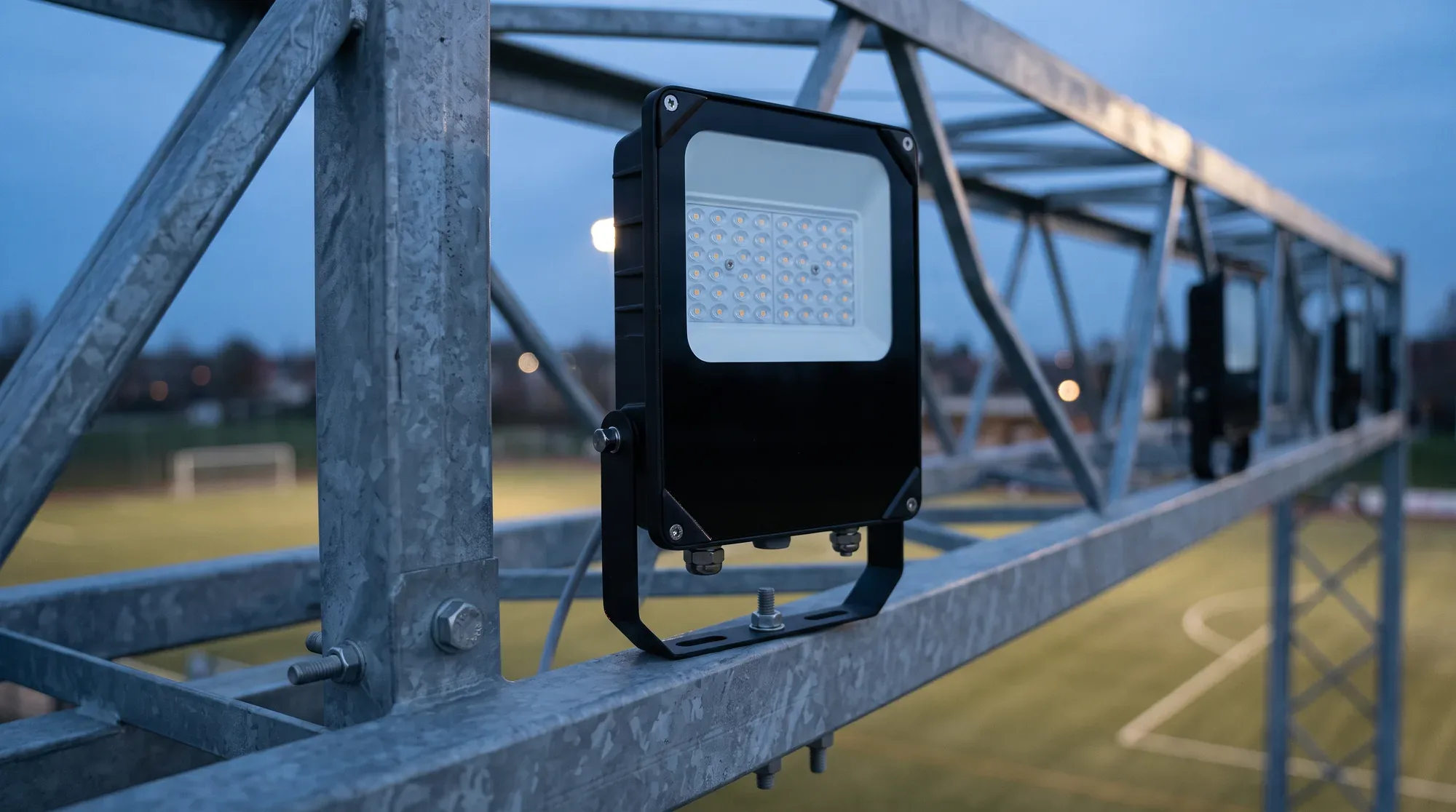
What is lit
The pitch and the service areas are the base: goals, technical areas, dugouts and the run-off space around the lines.
On a 7-a-side pitch the scale is smaller, but uses overlap: youth training, matches and school activity may share the same turf.
What the project decides
Dimensions —7-a-side or 11-a-side—, column height and spacing define where each floodlight can go. Uniformity on the turf and the light escaping towards nearby homes or the neighbouring pitch condition the aim.
The condition of the turf and the use calendar matter too: a pitch walked on every day is not lit in the same way as one reserved for competition.
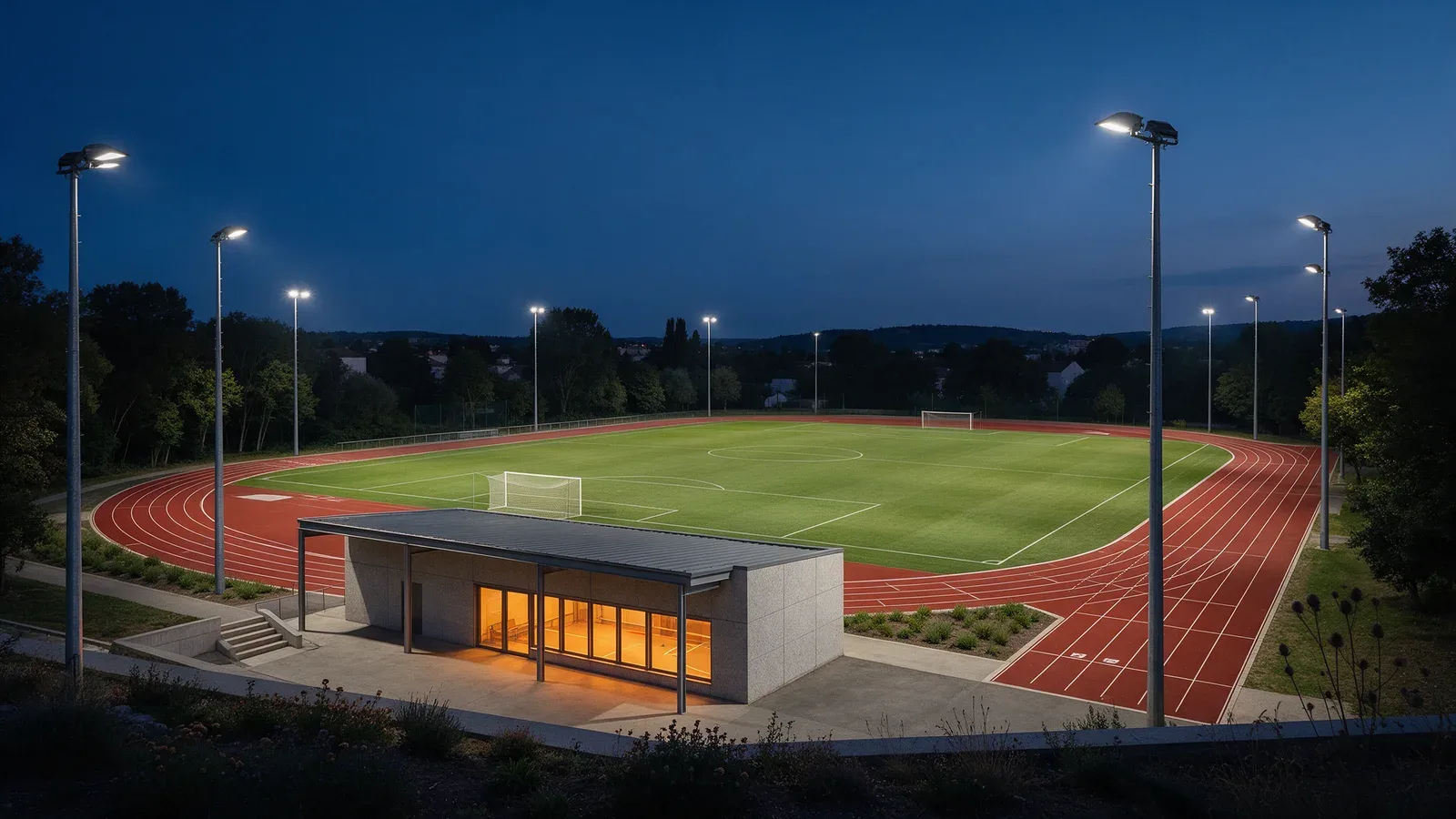
Training and competing do not ask for the same light. The project knows that from the first plan.
Illustrative view
How it is approached
The pitch plan, useful dimensions, existing or planned columns and weekly use are gathered. Alternatives are compared on that basis and reviewed with the project team.
If the pitch already exists, diagnosing supports and service connections is part of the work; changing only the floodlights may leave the underlying problem unresolved.
What to avoid
- Copying a stadium solution, lighting only the centre of the pitch and deciding without looking at real use are the most common mistakes.
- It is also worth avoiding closing a renovation without a maintenance plan: the pitch keeps being used while the light is changed.
From training to match day.
Real Conalux catalogue pages. The choice is defined with the project's technical team.
From plan to installation
Planning a new facility or refurbishment? Gather information about the site, intended uses and existing equipment, then discuss the solutions to explore with Conalux.
Define the uses
Set out the sports, activities and areas involved.
Gather the site information
Prepare plans, dimensions, existing equipment and known constraints.
Present the project to Conalux
Share this context with Conalux to start a professional conversation.
Frequently asked questions
What is the difference between lighting a 7-a-side and an 11-a-side pitch?
Dimensions, height and the number of points change. So does use: a 7-a-side pitch usually has more training hours and fewer matches.
Can only the lighting be renovated?
It is studied together with the condition of supports and service connections. If the base is in suitable condition, renovation can be more direct; if not, the scope changes.
What about light reaching nearby homes?
The position and aim of the floodlights are part of the project. Limits are defined according to the surroundings and the applicable regulations.
Your pitch, in the catalogue
Conalux brings together the solutions and advice to prepare the lighting for your football pitch.
Explore Conalux solutions