

Sports lighting
Stadium lighting
A stadium is lit for the game and for the people watching it. The project shares the light between the pitch, the stands and the routes that connect them.
The starting point
The stands play too.
The pitch sets the rules, but light does not stop at the touchline. Dugouts, access routes and warm-up areas share the same night and the same project.
- Pitch
- Stands
- Routes
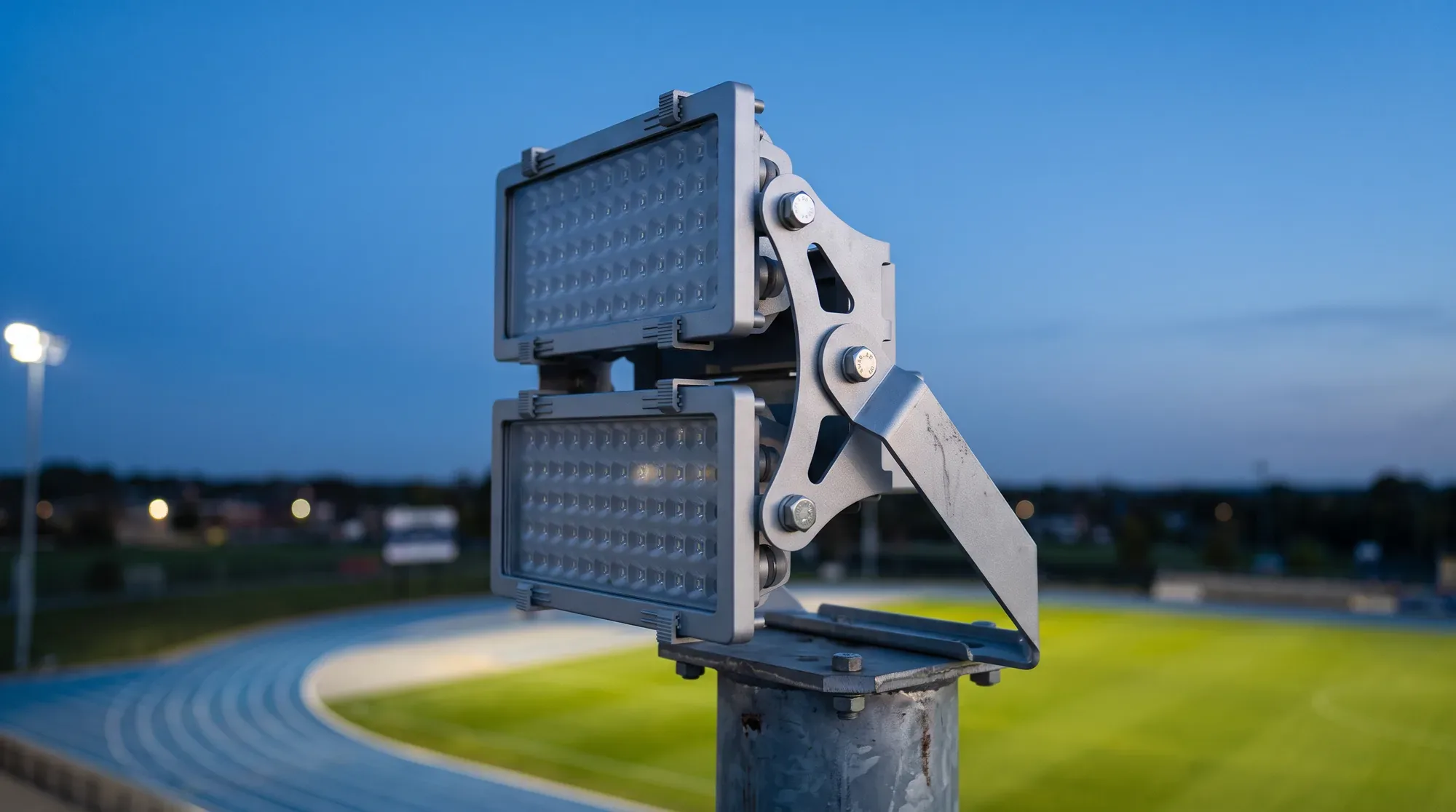
What is lit
The pitch is the centre, though not the only space. Warm-up areas, dugouts, player access and spectator routes complete what has to be resolved.
The stands add a second scale: what is seen from the back row is not what is seen from the touchline. The light has to work at both.
What the project decides
The dimensions of the pitch and the position of existing towers or masts condition almost everything. So does the roof, if there is one, because it casts shadow and determines where each luminaire can be hung.
The intended use —training, competition or events— and the light reaching nearby homes or roads complete the scope.
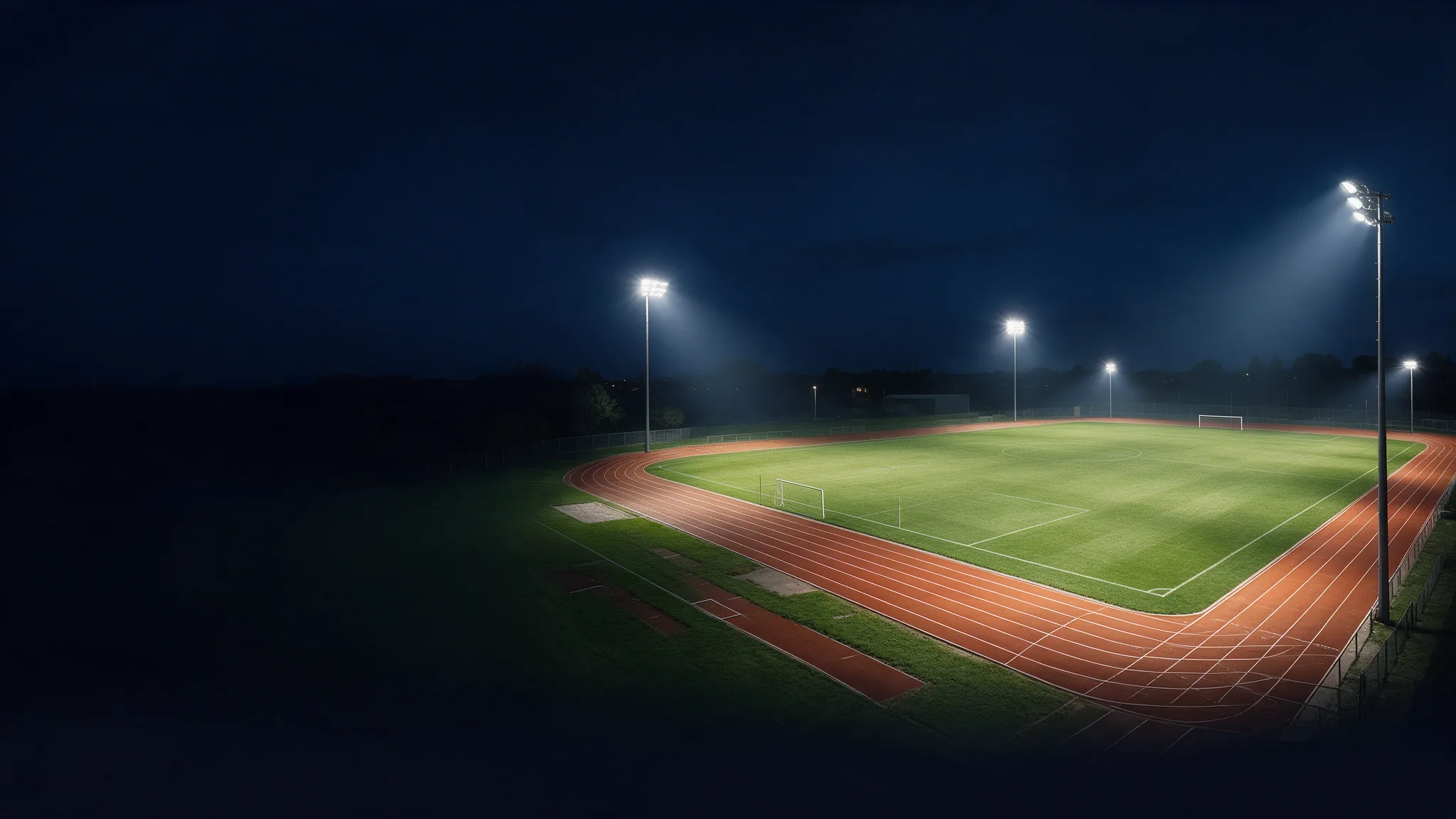
Stadium lighting is read as a route: from the pitch to the athletics track and on to the approaches.
Illustrative view
How it is approached
The work starts from the site plans, the orientation, the available heights and the use calendar. Alternatives are compared on that basis and reviewed with the technical team before the solution is fixed.
On an existing installation, the condition of the supports and maintenance access should be documented: good light that cannot be inspected ends up weighing more than any adjustment.
What to avoid
- Lighting only the centre circle, adding floodlights without checking what the towers can carry, and settling the stadium with a single image are the most expensive shortcuts.
- An illustrative visual is not a study. If the project needs defined levels and geometry, they have to be requested and reviewed before deciding.
Pieces for the stadium.
Real Conalux catalogue pages. The choice is defined with the project's technical team.
From plan to installation
Planning a new facility or refurbishment? Gather information about the site, intended uses and existing equipment, then discuss the solutions to explore with Conalux.
Define the uses
Set out the sports, activities and areas involved.
Gather the site information
Prepare plans, dimensions, existing equipment and known constraints.
Present the project to Conalux
Share this context with Conalux to start a professional conversation.
Frequently asked questions
What information should be gathered to start?
The site plans, pitch dimensions, the position and height of the towers and the use calendar. If an installation exists, its condition and access to maintenance points as well.
Can a stadium be improved without changing the towers?
It depends on their condition, the available height and what the project requires. It is reviewed with the technical team before proposing; forcing a solution onto a support that does not serve its purpose is a bad starting point.
How is light spill outside the site controlled?
The aim and position of the floodlights are part of the project. Limits and checks are defined according to the surroundings and the applicable regulations.
From the plan to the stands
Conalux brings together the solutions and advice to prepare the lighting for your stadium.
Explore Conalux solutions