

Sports lighting
Tennis and padel court lighting
In tennis and padel the ball travels fast and the eye changes height. The light has to follow that route without getting in the way.
The starting point
The ball comes first.
A court is lit to follow the ball, see the back and anticipate the bounce. Everything else —structure, glass, fencing— is arranged around that view.
- Height
- Reflections
- Vision
What is lit
The playing surface and run-off areas are the starting point. In padel, the glass walls and mesh add surfaces that also receive light.
In tennis, the court may be open or covered; in both cases, the back and the lines have to be read clearly from any position.
What the project decides
Available height sets the rules. On an outdoor court, the masts; on a covered one, the structure and fixing points. The aim of the floodlights seeks to follow the player's view, not cross it.
Reflections on glass and glare when looking across the net are studied with everything else. A well-placed point can still get in the way if it sits in the line of sight.
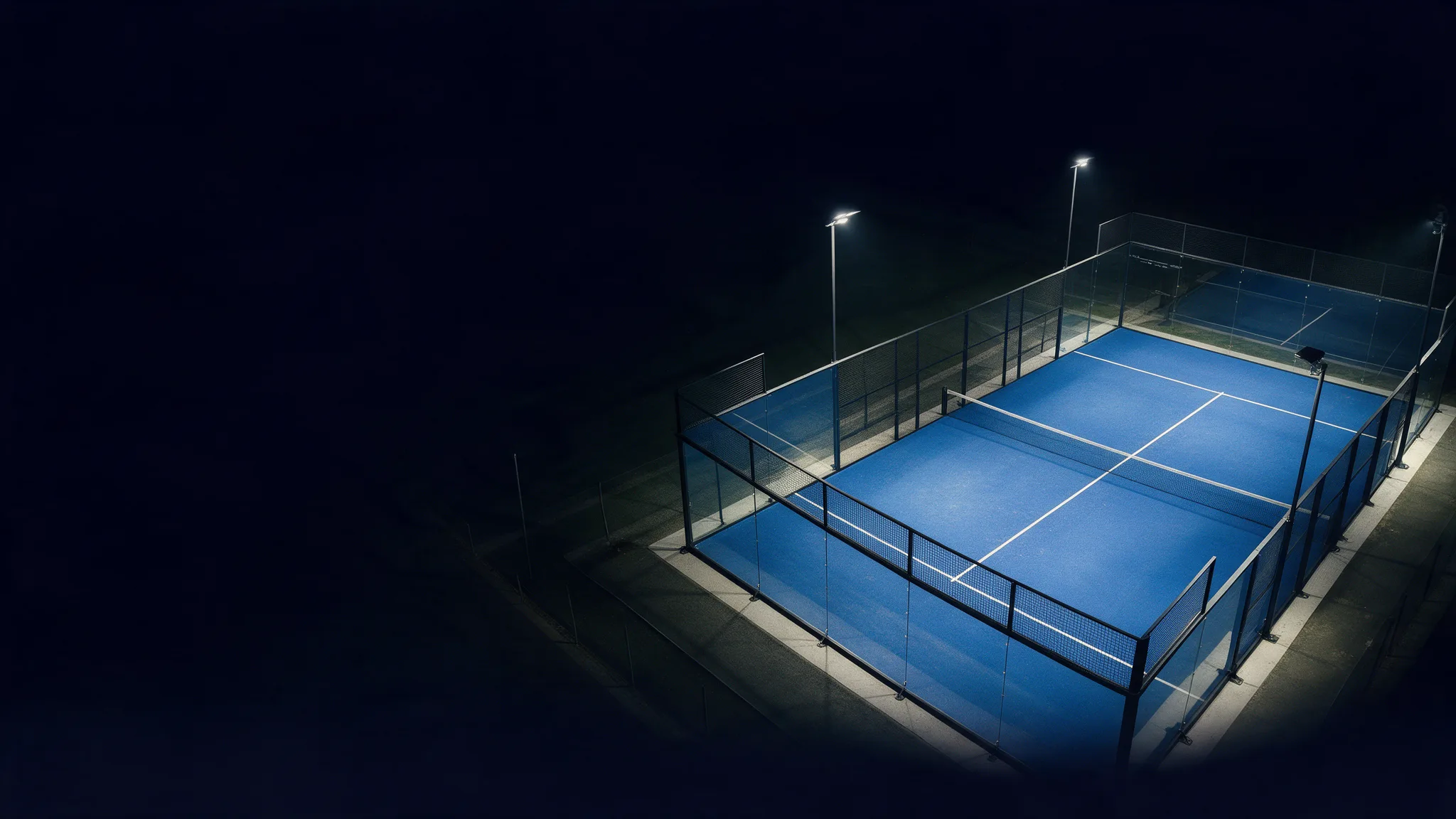
On a padel court light bounces; on a tennis court it travels. Both are planned from the player's view.
Illustrative view
How it is approached
The work starts from the court or site plan, the existing structure and the hours of use. Positions are compared on that basis and reviewed with the club team.
Where several courts share a site, the project may share supports and criteria, but each court keeps its own check.
What to avoid
- Lighting only the back of the court, placing points at eye level and treating glass as if it were an opaque wall.
- In padel, ignoring reflections is the fastest way to get a brightly lit court that is hard to play on.
Pieces for the court.
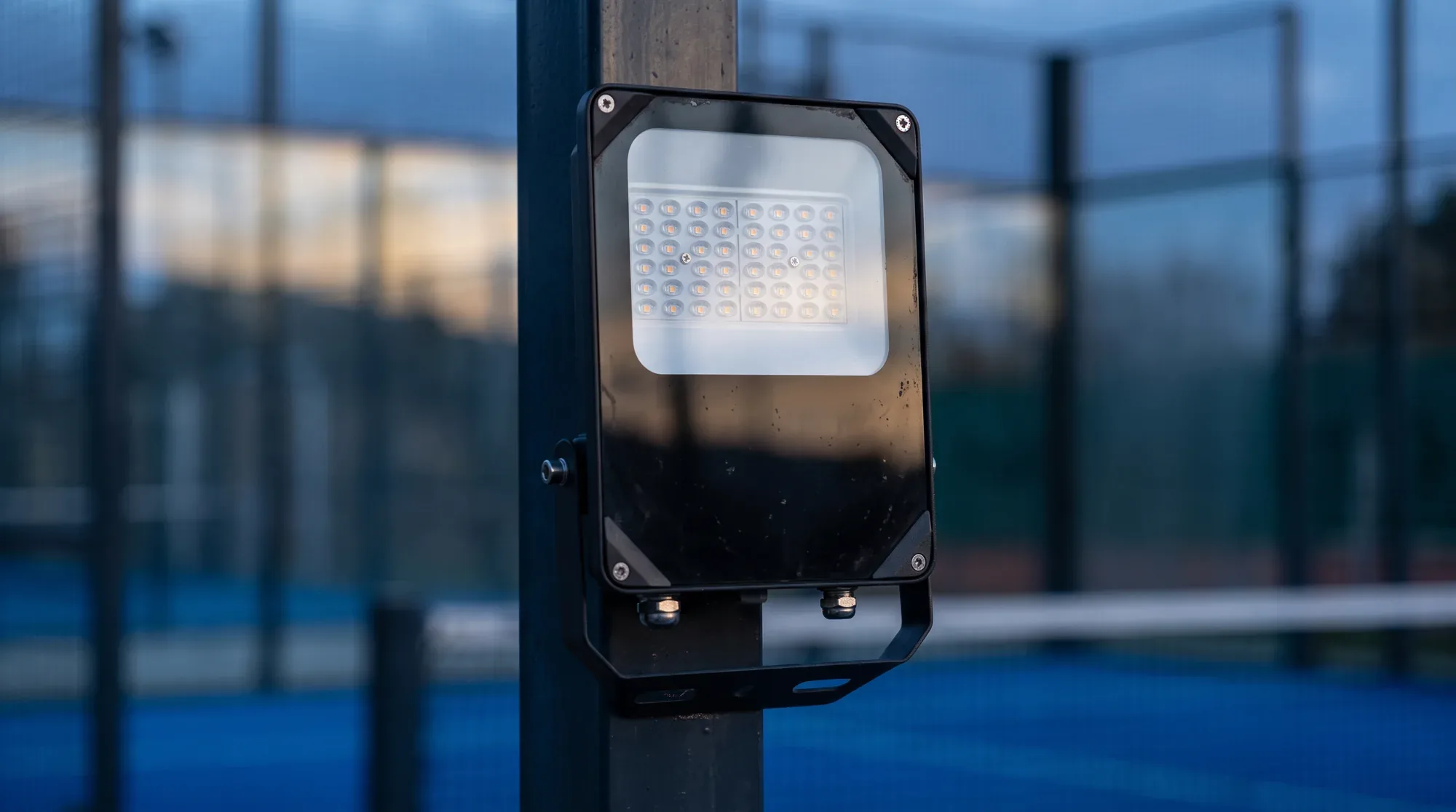
Real Conalux catalogue pages. The P6001 is the reference floodlight for court posts; the P7015, a 400/600 W unit designed for stadiums, is the closest page for tall masts. The choice is defined with the project's technical team.
From plan to installation
Planning a new facility or refurbishment? Gather information about the site, intended uses and existing equipment, then discuss the solutions to explore with Conalux.
Define the uses
Set out the sports, activities and areas involved.
Gather the site information
Prepare plans, dimensions, existing equipment and known constraints.
Present the project to Conalux
Share this context with Conalux to start a professional conversation.
Frequently asked questions
Does tennis differ much from padel?
Yes. Padel adds glass walls and a more enclosed space; tennis usually has a larger surface and more distance. Height and aim are adjusted case by case.
Does the same solution work for a covered court?
The structure and fixing points change. The criteria for vision and reflections remain, but the solution is defined together with the roof.
Can several courts be lit at once?
Infrastructure can be shared, but each court should be reviewed separately so that none ends up with a poorer reading than the others.
Your court, in the catalogue
Conalux brings together the solutions and advice to prepare the lighting for your tennis or padel courts.
Explore Conalux solutions